How to Plan a Wedding on a Budget: 10 Moves That Work
To plan a wedding on a budget, fix a total ceiling first, cut the guest list before you cut anything else, choose a less crowded date and track every quote, contract and payment in one place. Budget weddings do not feel cheap when the money goes to what you care about and nothing leaks out through surprise fees. Here are ten moves, in order of impact.
The 10 moves at a glance
| Move | What it changes | Typical effect |
|---|---|---|
| 1. Set one ceiling | Everything has a limit | Stops creep |
| 2. Shrink the guest list | Food, bar, chairs, stationery | Biggest saving |
| 3. Choose a quieter date | Venue and vendor rates | Often meaningful |
| 4. Pick two priorities | Where extra money goes | Focus |
| 5. Compare three quotes | Vendor pricing | Fewer overpayments |
| 6. Ask what is included | Hidden extras | Avoids double booking |
| 7. Simplify the menu | Per-person cost | Steady saving |
| 8. DIY only the easy things | Time vs money | Careful |
| 9. Keep a buffer | Late costs | Peace of mind |
| 10. Track payments | Missed dates and fees | Prevents surprises |
1. Set one ceiling and tell everyone
Write a single total and who is contributing. When a parent says "we will help", ask for a number and a date. Unspecified help is not a budget line. Then divide the total into categories using percentages so the plan adjusts when the total does. The wedding budget breakdown guide shows how.
2. Shrink the guest list first
Every guest adds a plate, a drink, a chair and an invitation. Cutting 20 guests from a catered wedding often saves more than changing the flowers, the photographer and the cake combined. Sort your list into must-invite, would-like and obligation, and decide where the line goes before you tour venues.
3. Choose a less crowded date
Saturdays in peak months are the most expensive. Ask venues for rates on Fridays, Sundays and off-peak months, and ask caterers whether a smaller package exists for a weekday.
4. Pick two priorities
Choose the two things you will remember: maybe the food and the photos. Allocate extra there and keep the rest simple. A budget works when you say no to the third and fourth thing without guilt.
5. Compare three quotes in one view
Request quotes from three vendors per category and compare total cost, what is included, the deposit and the cancellation terms. A comparison tab keeps those side by side instead of buried in separate email threads.
6. Ask what is included
Venues often include tables, chairs, linens or a coordinator. Ask before you rent them separately. Record "included" in your list so you do not book twice.
7. Simplify the menu
A shorter menu, a buffet or family style service, or a smaller bar list can lower the per-person price. Ask the caterer for two options at different price points.
8. DIY only the easy parts
Printing a sign or arranging a small bouquet can save money. Building an arch or baking a cake the morning of rarely does once you count your time and stress. Give every DIY project an owner and a due date.
9. Keep a buffer
Keep 5 to 10 percent unallocated. Alterations, tips, overtime fees and extra rentals show up late.
10. Track every payment
This is where budgets are saved or lost. Record each quote as an estimate, each signed contract as the actual cost, each deposit as paid and the remainder as balance due. Put every due date in a payment list so no deposit or final balance arrives as a surprise.
A tracking setup that makes saving easier
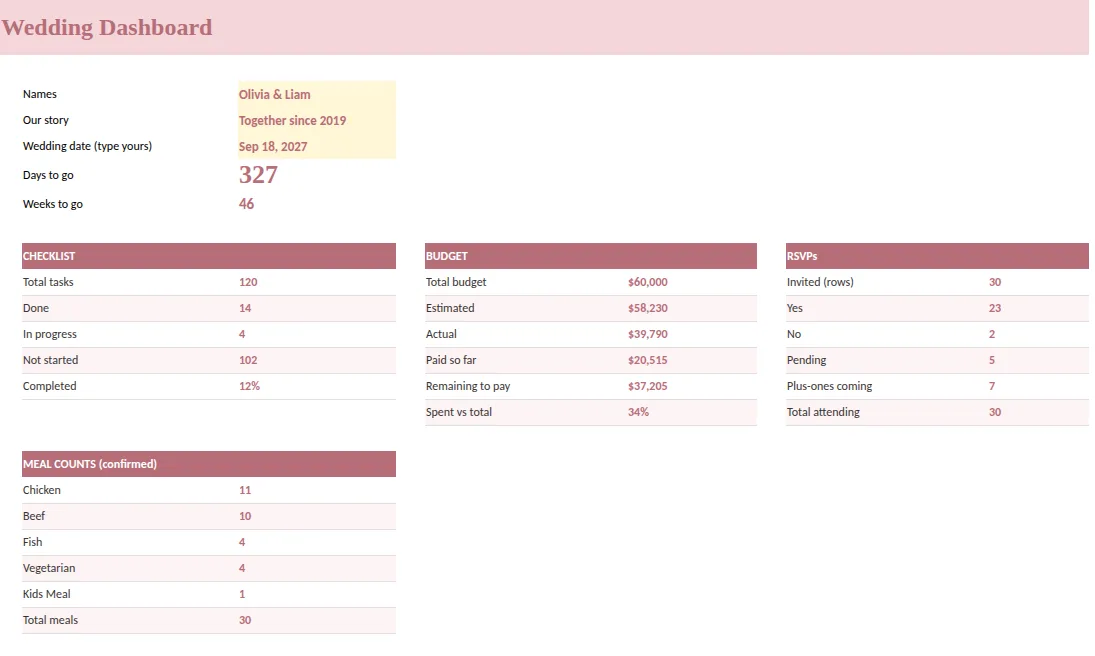
The Ever After Wedding Planner puts this into practice. Its Budget tab takes your total and gives every category a target based on a typical US share, then compares estimated, actual, paid and balance due. The Payments tab lists every deposit and final balance with a due date and status, and the Dashboard shows total budget, paid so far and remaining to pay. Vendor Comparison lets you put three quotes side by side. The package includes a Printable Wedding Planner PDF with a sample you can look at above, and costs $34.80 one time. Replace the example figures with your own before you rely on the totals.
When money is tight, keep this routine
- Weekly: log new quotes and payments.
- Before signing: check the category target against the contract.
- After signing: copy every payment date into the Payments list.
- Monthly: review remaining budget against remaining tasks.
If a category goes over, take the difference from another category the same day. That is the entire system.
Where small budgets leak
Most overspending on a small budget comes from five places. Watch them every month:
- Service charges and taxes. A quote may list a price before gratuity and tax. Ask for the all-in number.
- Overtime. Extra hours for a photographer, DJ or venue add up quickly. Build the schedule so it fits the hours you booked.
- Rentals. Chairs, linens and glassware can be separate lines. Ask what the venue already has.
- Alterations and last-minute attire. Add a line for them from the start.
- Tips. Decide in advance who receives one and how much, and add it to the budget as a category.
Giving each leak its own line in your budget makes it visible, and visible costs are easy to manage. A line you did not create is a surprise you will pay for later.
Keep going
For a full month-by-month order, read how to plan a wedding. For the supplier side, see the wedding vendor tracker. And to compare formats for your money tracking, read the wedding budget template guide.